
Tax documents checklist for freelancers and small-business owners

Let’s start with what you’ve got
You’ve opened the folder, found a few tax forms, and remembered the receipts still sitting in your inbox. Now you’re wondering, “What do I actually need to send?”
If you’re freelancing or running a small business, I’d start with what you already have. You don’t need to spend the weekend making every folder look perfect before you ask for help.
Let’s get the business records together, work out what’s missing, and leave the tax questions for your preparer. This tax documents checklist gives you a place to begin.
1. Find the records that are easiest to reach
Start wherever your records already live: your email, bookkeeping software, bank downloads, or the folder on your desk. You don’t need to move everything into a new system today.
Put your business name and the year the records cover on the folder or list. It sounds small, but it makes it easier to spot a statement from the wrong year before it gets mixed in.
If you’re unsure which period your business uses, ask your preparer. The IRS explains that a tax year is the period used to keep records and report income and expenses. Use the year the records relate to, rather than simply the year you’re sending them.
And if you’ve only found part of the year, say that. “I have January through August downloaded; I’m still getting the rest” is enough to explain where things stand.

2. Think about all the ways customers paid you
Before you focus on the tax forms, think about how money came into the business. Did customers pay by bank transfer, card, check, cash, or an app? Did you use more than one platform?
That’s where I’d look next. Gather your invoices, sales records, bank deposit records, and the reports from any payment platforms you used. Keep the Forms 1099-NEC or 1099-K you received with those records.
A missing tax form doesn’t necessarily mean there’s nothing to report. The IRS says gig and freelance income must be reported even when no information return arrives. Bring the payment records to your preparer so they can see the fuller picture.
One thing to watch: several documents can describe the same payment. You might have the invoice, the platform transaction, the bank deposit, and a tax form. Don’t add all four totals together as though they were separate income.
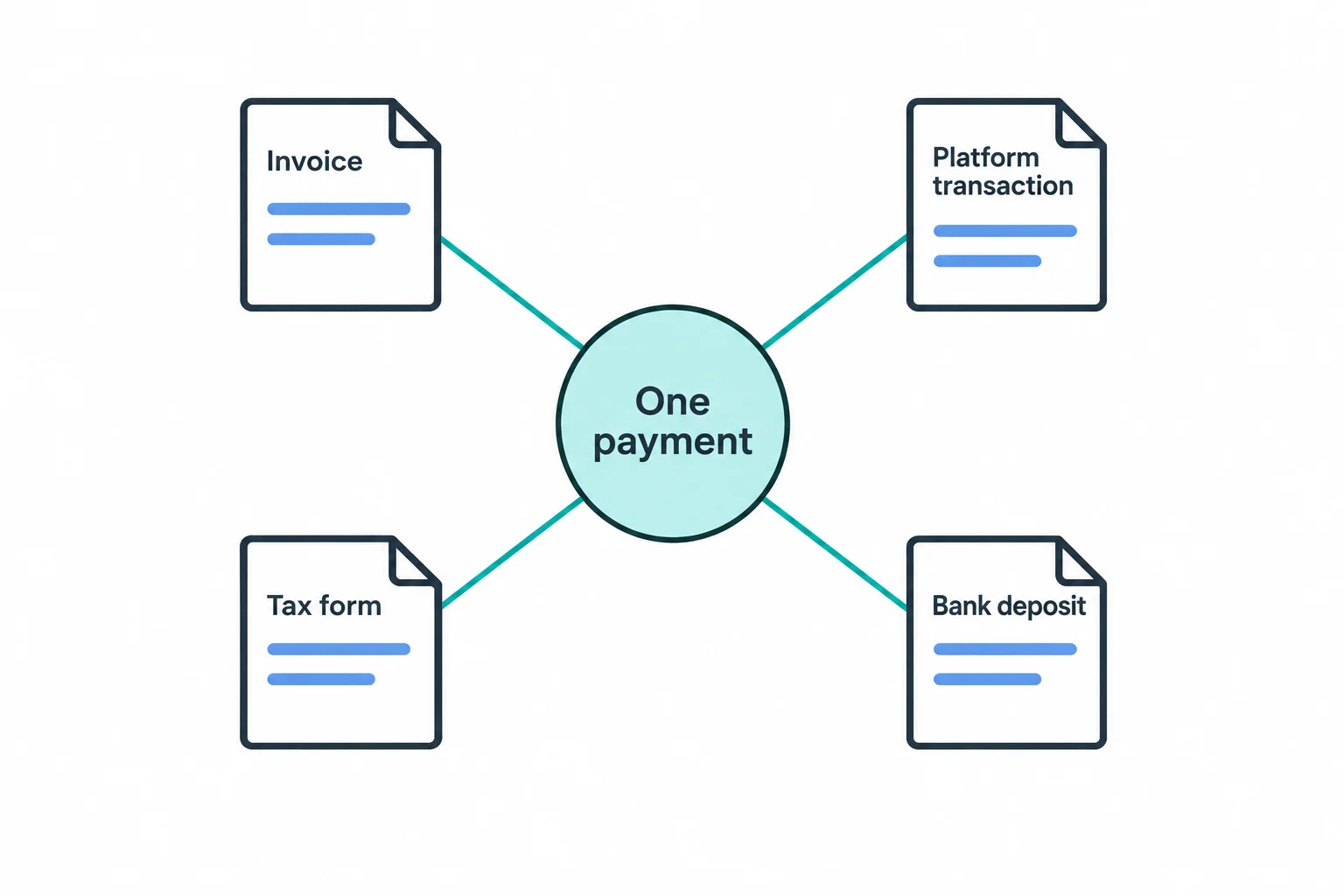
The amounts may look different, too. A Form 1099-K shows gross payments before adjustments for fees, refunds, or credits, while the amount reaching your bank may already have a fee taken out.
You don’t have to untangle that on your own. Keep the related records together and ask, “Can you help me check how these amounts connect?”
3. Add a little context to your receipts
Now look at what you spent. Gather the receipts or invoices you can find, along with the bank or card records showing payment.
If you tell me, “There’s a charge on my card, but I can’t find the receipt,” my first question would be, “Do you remember what you bought?”
Maybe you do, and the receipt is just buried in email. Maybe the name on the statement doesn’t ring a bell. Either answer gives you somewhere to start. Check the vendor account or email if you recognize the purchase; otherwise, leave it as a question.
The payment record and receipt can provide different details. The IRS notes that you may need a combination of supporting documents to show who was paid, how much, when, and what you bought.
I’d also ask, “What did you use it for?” You can answer in your own words. “That’s the software I use to put client proposals together” is more helpful than trying to choose an accounting label.
If you used something personally as well as for work, mention that. Your preparer can ask for the details they need and work through the tax treatment with you.
4. Use this checklist to fill in the gaps
Your business won’t need every item on this list. Start with the basics, then look at what changed during the year. Did you hire someone, pay contractors, buy equipment, or bring in a new owner? Those are useful things to tell your preparer.
Income: invoices, sales records, bank deposits, payment-platform reports, and tax forms you received.
Spending: receipts or vendor invoices, payment records, and a short note when the business purpose isn’t obvious.
Last year: your prior-year return and existing bookkeeping reports, plus anything your preparer has requested.
Employees, if you have them: payroll reports, Forms W-2, and employment-tax records.
Contractors, if you paid them: invoices, payment records, Forms W-9, and any Forms 1099 already prepared.
Equipment or other business assets: purchase, sale, financing, and existing depreciation records that apply. Mention any personal use.
Business changes: formation or ownership documents when relevant or requested, and updated contact details.
For records relating to employees and business assets, IRS Publication 583 gives more detail. Your preparer can narrow the requests to what applies to your business.
If you also have a job, keep your employment Forms W-2 with the personal records your preparer requests. Ask for their separate personal-tax checklist, and mention relevant household changes. That keeps this business list manageable.
5. Tell your preparer where you’re stuck
You don’t need a polished explanation. A short note will do: “I’m still looking for the June platform report. I have the invoices and bank statement, and I’ve requested another copy.”
That tells your preparer what’s missing, what they can already look at, and what you’ve tried. Keep the note beside the records so it doesn’t get lost in a separate email.
Then ask the question you need answered. “Can we start with these?” “Which report should I download?” “Would anything else help explain this charge?”
If several months of records are mixed together, our guide to getting caught up on bookkeeping can help you work out where to begin. You can discuss that backlog while you keep collecting the documents you can find.
Start the conversation with what you have
If you’d like a shorter starting list, our document checklist groups common records into income, expenses, and prior-year information.
For now, put the documents you’ve found together and add one note about what’s missing.
Tell me what you’ve gathered and where you’re stuck. We can take the next step from there.
Sources
Tax years | Internal Revenue Service — Internal Revenue Service
Gig economy tax center | Internal Revenue Service — Internal Revenue Service
What to do with Form 1099-K — Internal Revenue Service
What kind of records should I keep | Internal Revenue Service — Internal Revenue Service
Publication 583 (12/2024), Starting a Business and Keeping Records — Internal Revenue Service