
Freelancers: A Plain-English Take on Estimated Taxes

“I’ve put money aside. Do I need to pay something now?”
You’ve been paid for a project, put some money aside, and gone back to your client work. Then you hear someone mention quarterly taxes. Now you’re wondering, “Was I supposed to send a payment? How much? And when?”
That’s where I’d pause with you. Before we talk about an amount, tell me where your income comes from and what tax you’ve already paid. Are you freelancing full time? Doing a little work alongside your job? Has this year been busier than you expected?
Those details matter. With estimated taxes for freelancers, we’re looking at expected income, deductions, credits, and taxes already paid. I wouldn’t want you choosing an amount just because someone else uses that percentage.
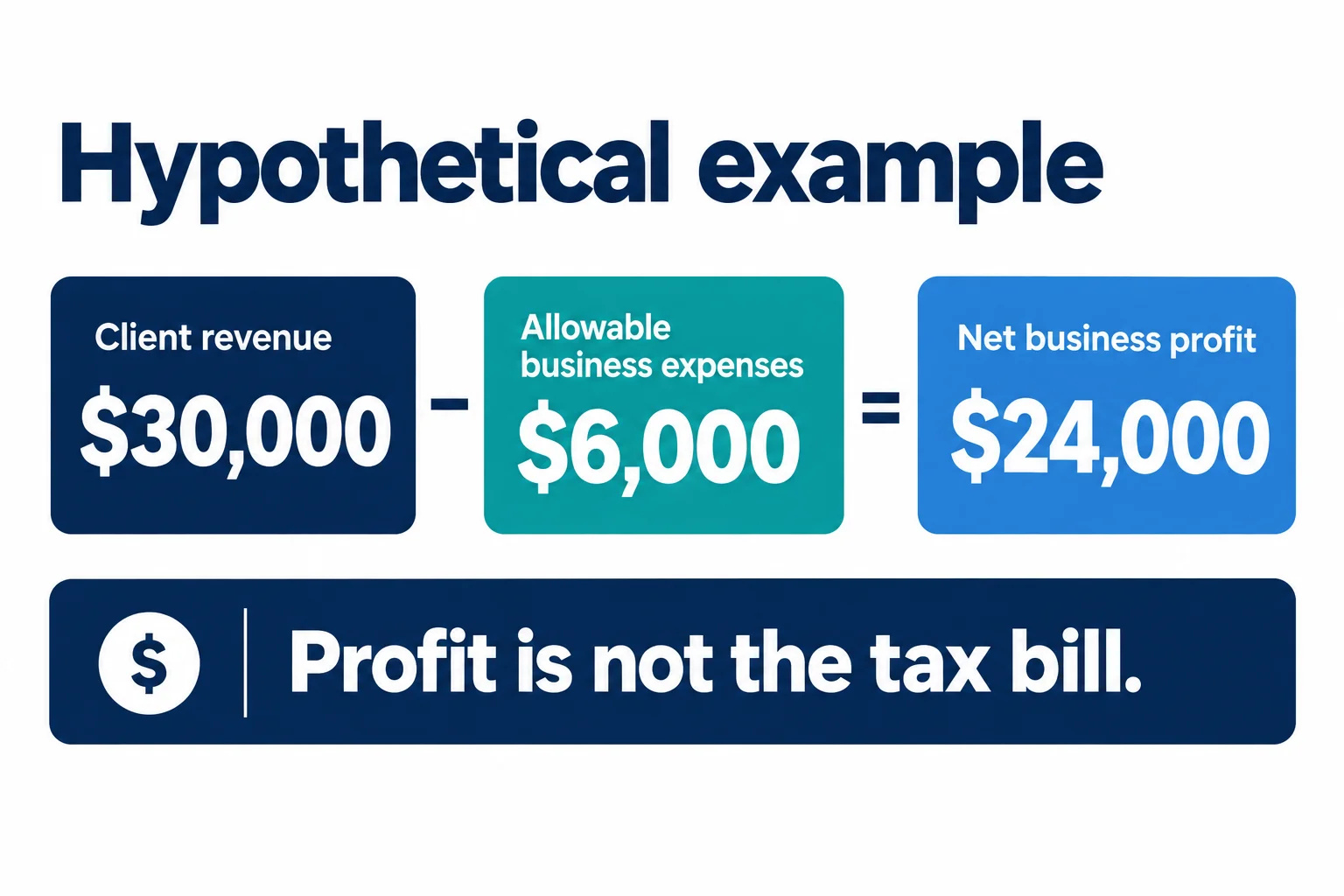
Let’s use a simple example as we go. Suppose your clients pay you $30,000 over the year and you have $6,000 in allowable business expenses. That leaves $24,000 of business profit for this illustration. It doesn’t tell us your tax bill yet.
Let’s take the questions one at a time, so you know what to bring into the conversation with your tax preparer.
1. “Why would I pay before filing my return?”
Think about what happens when you get a paycheck. Your employer usually takes tax out before the money reaches you. A client payment often arrives without that withholding. You may need to handle payments during the year yourself, rather than waiting until you file.
Estimated payments are advance payments toward your annual tax. You get credit for them when the tax on your return is worked out. They can cover income tax and self-employment tax, rather than being a separate extra tax.
Income tax depends on your taxable income and overall tax situation. Self-employment tax pays for Social Security and Medicare. You generally owe self-employment tax when your net earnings from self-employment reach $400. Net earnings for this test differ from gross client receipts. Schedule SE applies adjustments to business profit to calculate the earnings subject to that tax. Special rules apply to some workers, including certain church employees and people with approved religious exemptions.
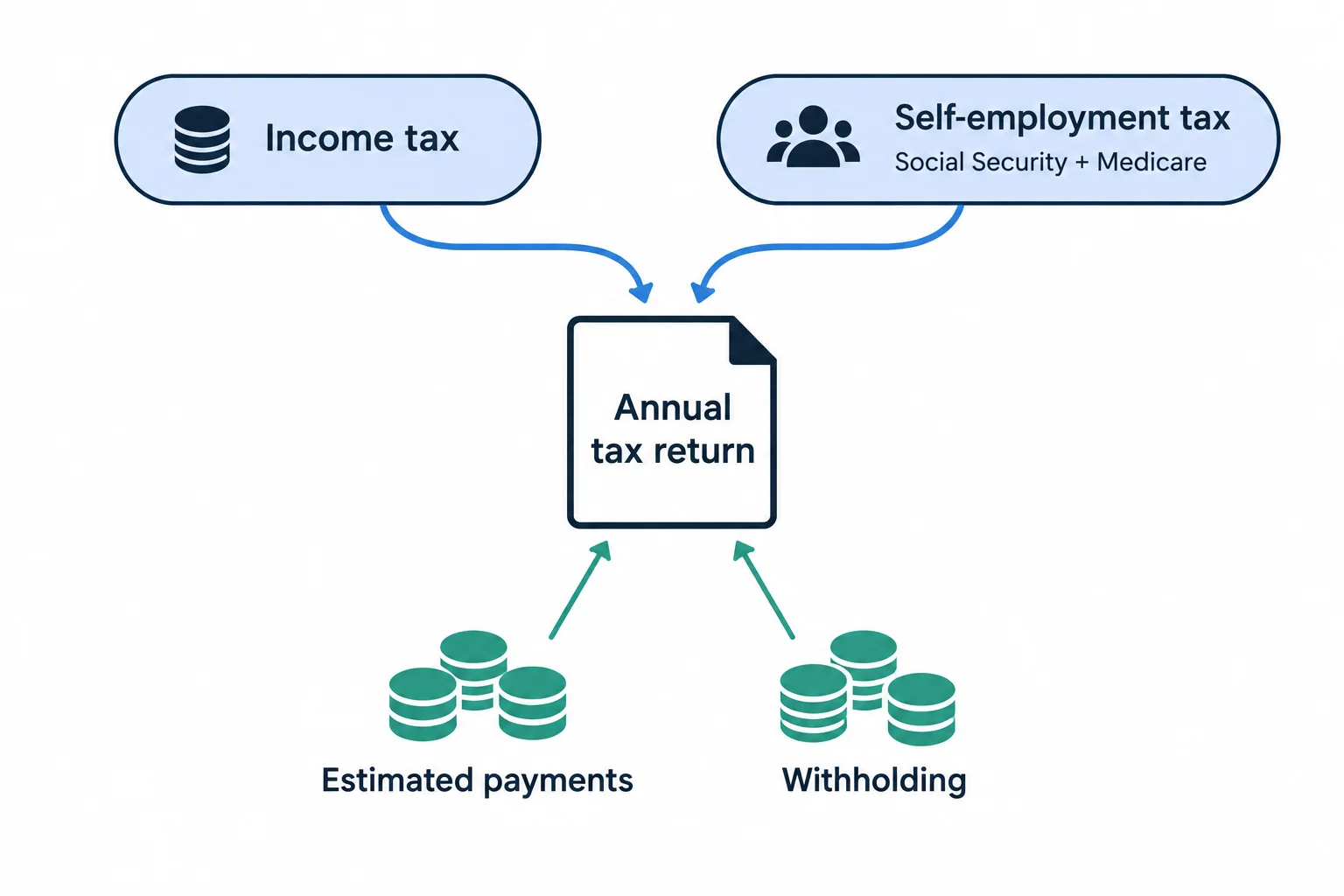
Here’s the part I’d want to check with you: owing self-employment tax doesn’t automatically mean you need separate estimated payments. Enough withholding from a job may already cover the overall amount. An exception may apply, too.
That’s why I’d ask your preparer to check the complete 2026 estimated-payment eligibility test and exceptions with your situation in front of them.
So when you tell me, “My clients paid me $30,000,” we’ve started the conversation. We haven’t reached the payment amount. We still need to look at your profit and what tax has already been paid.
2. “How do we get from client payments to a tax estimate?”
If we were looking at your figures together, I’d first separate what clients paid from what was left after business expenses. Net business profit is what remains after business expenses. That’s the starting point your preparer needs, rather than treating every dollar that came in as profit.
For our made-up example, assume all $6,000 of expenses are allowable business expenses:
$30,000 in client revenue − $6,000 in allowable business expenses = $24,000 in net business profit.
Not sure where one of those expenses belongs? Our guide to small-business expense categories can help you put that question into words. You don’t have to settle it before asking.
Your preparer takes that profit into the wider calculation using the 2026 Form 1040-ES worksheet. They’ll consider income tax, self-employment tax, relevant adjustments and deductions, credits, withholding, and estimated payments you’ve already made.
I’d also ask about other income and your filing status. Wages, investment income, or a spouse’s income on a joint return can change the result. Two freelancers with the same business profit can need different payments. Your prior-year return is part of that review under Publication 505, too.
You might be thinking, “Couldn’t I just put aside 30%?” You can use a percentage to help manage your savings, but it won’t tell you whether the next payment is right for you. I’d want your preparer to compare what you’ve saved with what the calculation calls for. Then you know what the money is meant to cover.
And before you close the conversation, ask about your state. Working out a federal payment doesn’t settle that part.
3. “What if I earn more—or less—than I expected?”
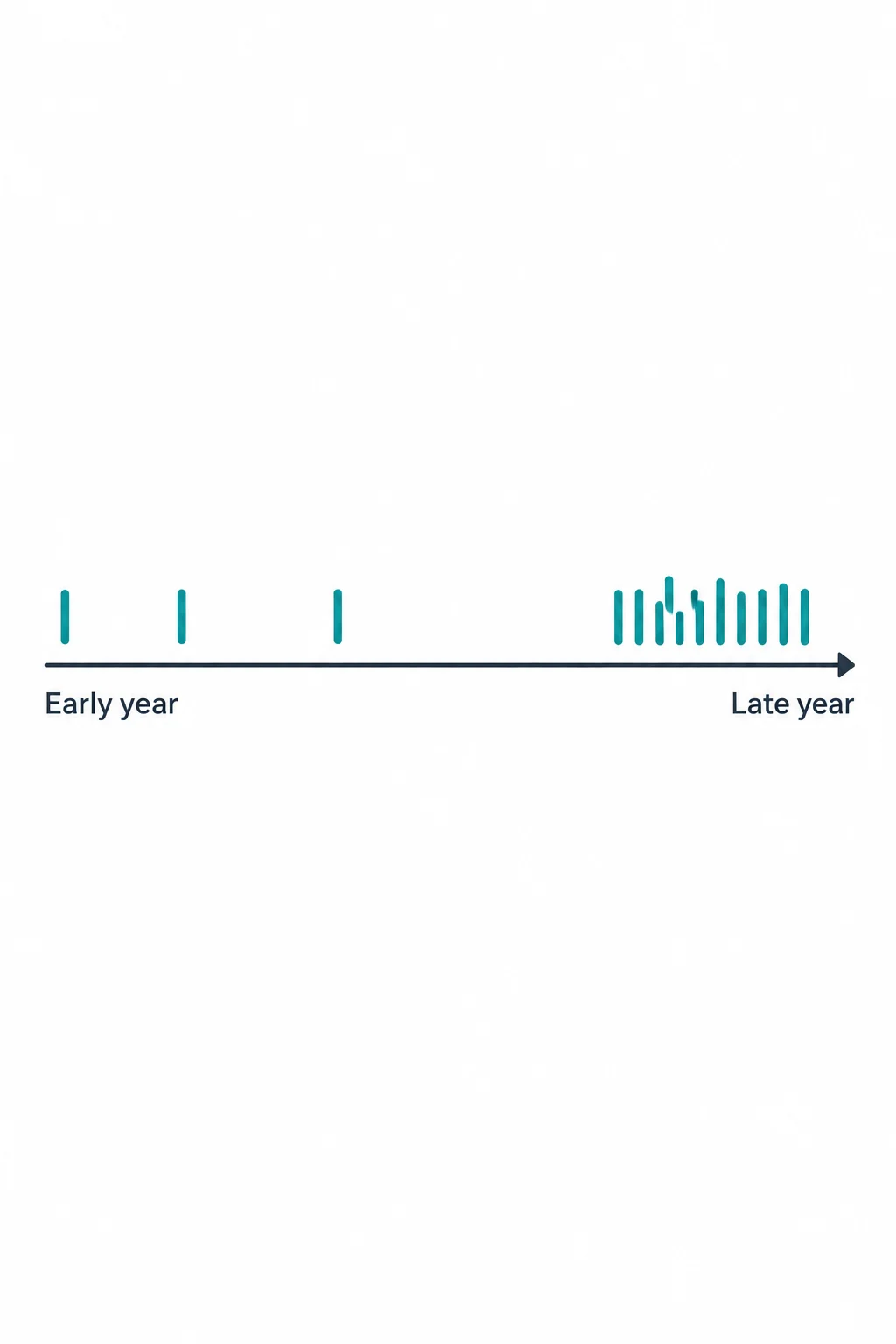
Say most of the work in our example came in late in the year. I’d want you to mention that, rather than handing over an annual total that makes every month look the same.
For uneven income, ask about the annualized income installment method. It considers income and other tax items through specific periods and may reduce what’s required for an earlier period. There’s a calculation behind it, explained in Publication 505; it isn’t simply permission to wait until the end of the year.
Or perhaps the year has changed since you last spoke. A contract ended. A new client came along. Tell your preparer so they can refigure your estimate using the 2026 Form 1040-ES worksheet. They’ll need to account for what you’ve already paid, including any prior-year overpayment applied to 2026.
If you also have a W-2 job, bring that into the conversation. Additional withholding from wages, requested through Form W-4, may cover some or all of the tax associated with freelancing. We shouldn’t assume you need separate estimated payments without looking at the full calculation.
You don’t need to choose a method on your own. Bring your updated expectations and, if you have a job, a recent pay stub. Then ask, “Does the way I’m paying still make sense for what I now expect to earn?”
4. “Which date am I working toward?”
Once you know whether a payment is needed, check the official 2026 federal payment schedule for calendar-year individuals. Here are the standard dates from the 2026 instructions:
Standard 2026 federal calendar-year payment periods and due dates:
January 1–March 31, 2026: April 15, 2026.
April 1–May 31, 2026: June 15, 2026.
June 1–August 31, 2026: September 15, 2026.
September 1–December 31, 2026: January 15, 2027.
This is why I’d check the dates with you instead of just saying “pay quarterly.” Those periods cover three, two, three, and four months. A reminder every three months could send you toward the wrong date.
Use this as the standard calendar, then confirm how it applies to you. The dates alone don’t tell us which installments you owe or how much they should be.
There are timing exceptions, too. Applicable disaster relief can change a deadline. The 2026 instructions also say the January 15, 2027 payment isn’t required if you file your 2026 return by February 1, 2027 and pay the entire balance with it. Check which rules apply to you, and confirm any separate state date.
5. “Does moving money into savings count as paying?”
No—that money is still yours, sitting in your bank account. Putting it aside is a useful distinction to keep clear: “I’ve saved it” and “I’ve paid it” are two different things. When you review your figures, tell your preparer which you mean.
Form 1040-ES contains instructions, an estimating worksheet, and payment vouchers. It isn’t another annual return to file. You use the appropriate voucher with a mailed check or money order; you don’t mail one for an electronic payment.
When you’re ready to pay, use the official payment options on the IRS website. You’ll find IRS Direct Pay, an IRS Online Account, and information about paying by mail with the appropriate voucher.
The names of the forms can get confusing. Schedule C generally reports a sole proprietor's business profit or loss, while Schedule SE figures self-employment tax. Those are part of annual filing where they apply. Estimated-payment paperwork serves a different purpose.
When you pay, keep the amount, date, tax year, payment type, and confirmation, along with the bank record. A Direct Pay confirmation establishes submission, so also check that the payment processed successfully. That helps your preparer distinguish what you reserved from what you actually paid.
6. “What should I ask before the next payment?”
Before the next payment, I’d put two things in front of you: what you now expect for the year and what you’ve already paid. Your preparer needs both. The calculation includes expected income, deductions, and credits, so mention changes outside the business as well.
Here are five questions I’d encourage you to ask:
Has my expected business profit or other income changed since the last estimate?
What federal income tax withholding is already being counted?
Which estimated payments have already been credited for this tax year?
Would the annualized income installment method for uneven income, or additional withholding from my W-2 wages, be relevant?
Based on that review, what amount should I pay next, and what date applies?
You don’t need to arrive with a perfect packet. Bring your current profit summary, what you expect for the rest of the year, any payroll withholding information, and your payment confirmations. Put a date on the summary. If a figure is still an estimate, say so—that’s useful to know.
Our tax-document checklist is there if you need the broader preparation list. For now, let’s keep this conversation focused on the next payment.
Start with one message to your tax preparer: “Here’s where my income stands, and here’s what I’ve already paid. Can we review the amount and date for my next payment?” You don’t have to work out the answer before you ask.